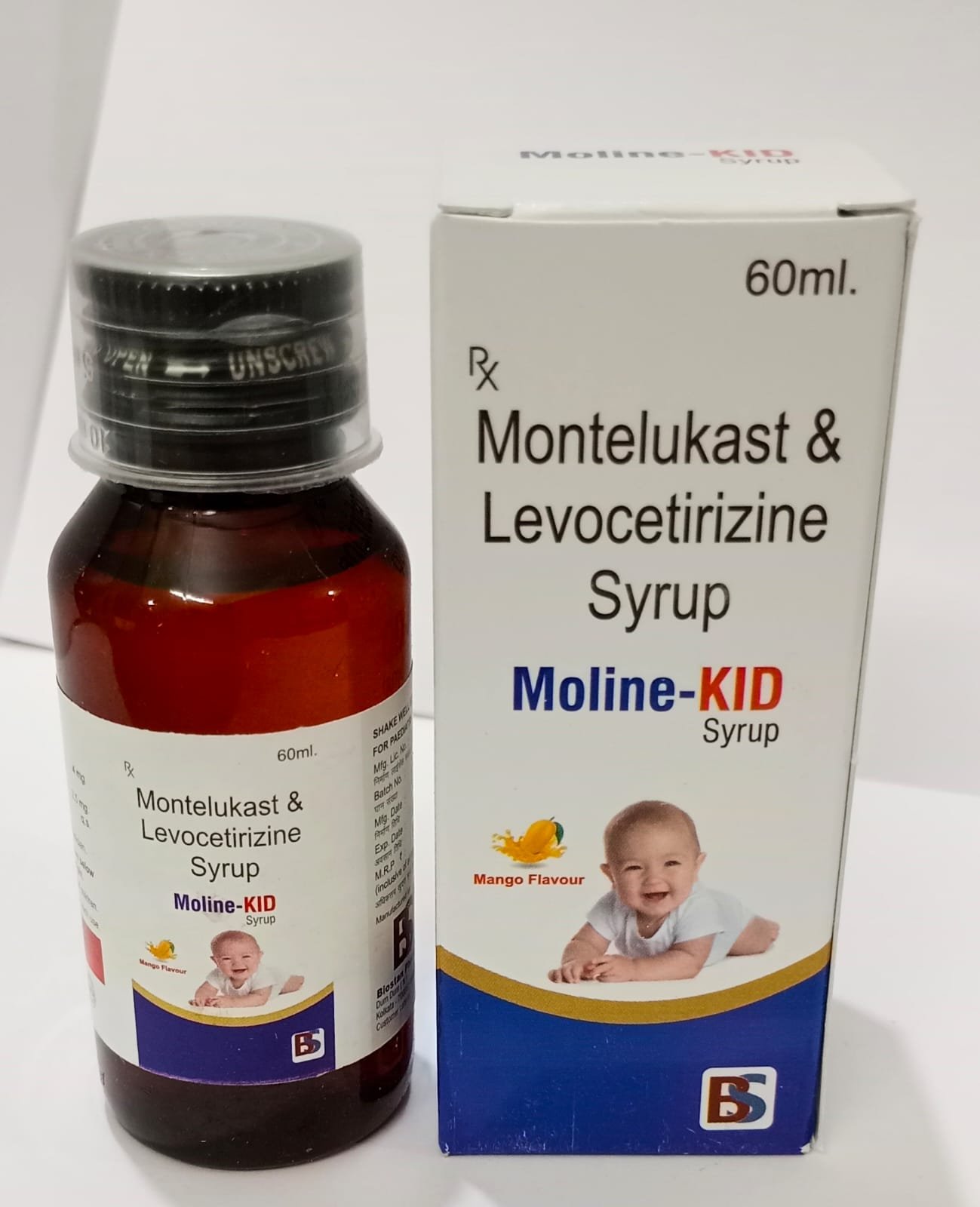
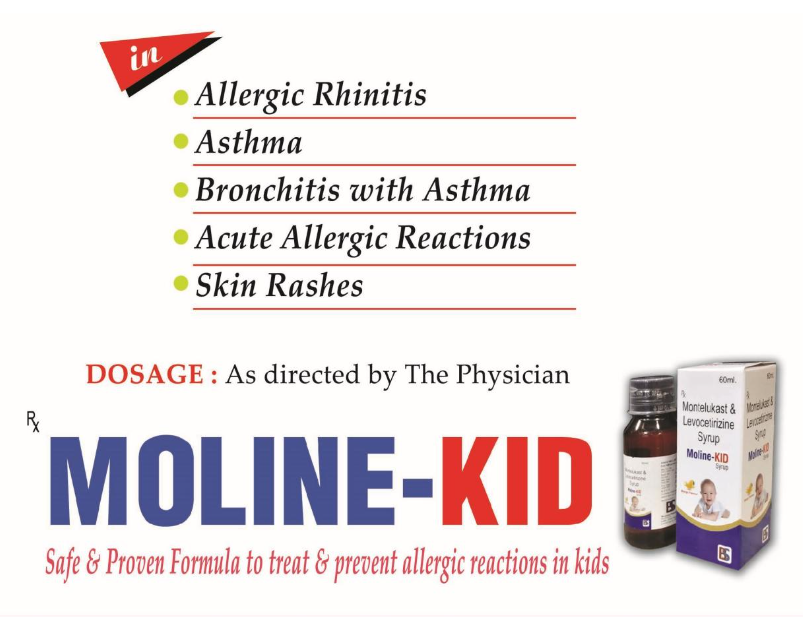
FOR PERSISTENT ALLERGIC RHINITIS
Contains Levocetirizine (2.5 mg) and Montelukast (4 mg).
Effective for year-round allergic symptoms like runny nose, watery
eyes, sneezing, itching, and hives (itchy, painful eruptions).Helps
relieve nasal blockage.Side effects may include drowsiness, fever,
rash, and weakness.
Administer with or without food, and complete the full course of
treatment even if symptoms improve1
Works by blocking histamine (responsible for allergic symptoms)
and reducing leukotrienes (causing airway and nasal swelling).
Effective for allergic symptoms in children
Let’s delve into the details of these ingredients:
Levocetirizine:
Mechanism of Action:
Levocetirizine is a second-generation antihistamine. It selectively
blocks histamine H1 receptors, thereby reducing allergic
symptoms such as itching, sneezing, and runny nose.
* Indications:
* Allergic rhinitis (hay fever)
*Chronic idiopathic urticaria (chronic hives without a known
cause)
Dosage:
Dosage varies based on age and weight. Consult your doctor for
precise dosing instructions.
Side Effects:
Common:
Drowsiness, dry mouth, headache
Rare: Allergic reactions, liver dysfunction
Precautions:
* Avoid alcohol while taking levocetirizine.
*Inform your doctor about any existing medical conditions or
other medications you’re taking.
Montelukast:
Mechanism of Action:
Montelukast is a leukotriene receptor antagonist. It inhibits the
action of leukotrienes, which cause inflammation and
bronchoconstriction.
Indications:
*Asthma (especially exercise-induced asthma)
* Allergic rhinitis
Dosage:
Dosage depends on age and specific condition.
Side Effects:
Common: Headache, stomach upset
Rare: Behavioral changes (in children), liver problems
Precautions:
Take montelukast regularly, even if symptoms improve.
Report any unusual mood changes to your doctor.
Remember to consult your healthcare provider before starting any
medication, especially for children. They can provide personalized
advice based on your child’s health and specific needs
The duration for which you can safely give these medications
depends on the specific condition being treated and your child’s
response. However, here are some general guidelines:
Levocetirizine and Montelukast:
These medications are usually prescribed for allergic rhinitis
(hay fever) and asthma.Consult your pediatrician to determine
the appropriate duration based on your child’s symptoms and
overall health.
Typically, they are used for short-term relief during allergy
seasons or as needed for asthma symptoms.
Regular follow-up with the doctor is essential to assess efficacy
and monitor any side effects.
Safety Precautions:
Always follow the prescribed dosage and administration
instructions.
Report any adverse effects promptly.
If symptoms persist or worsen, seek medical advice.
Remember, individual responses may vary, so consult your
healthcare provider for personalized guidance.