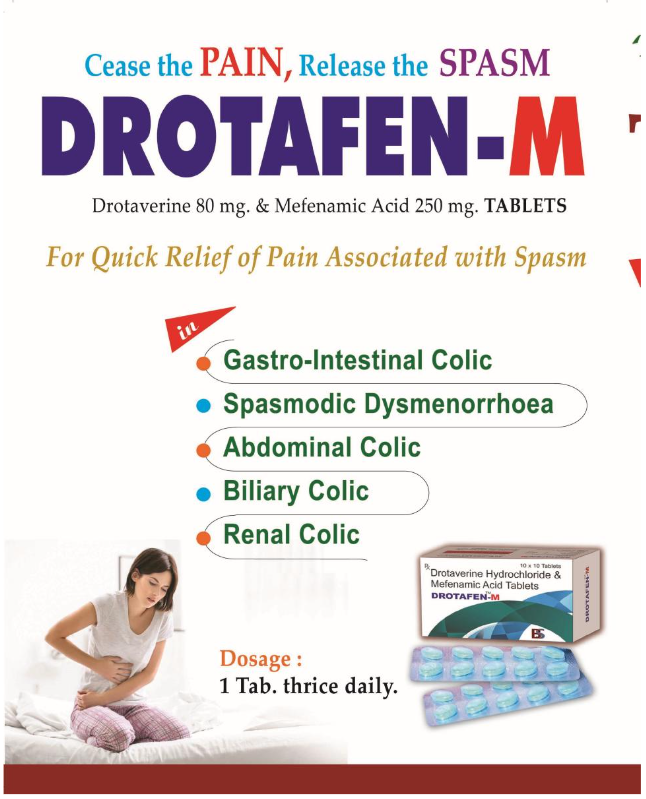
Cease the PAIN, Release the SPASM
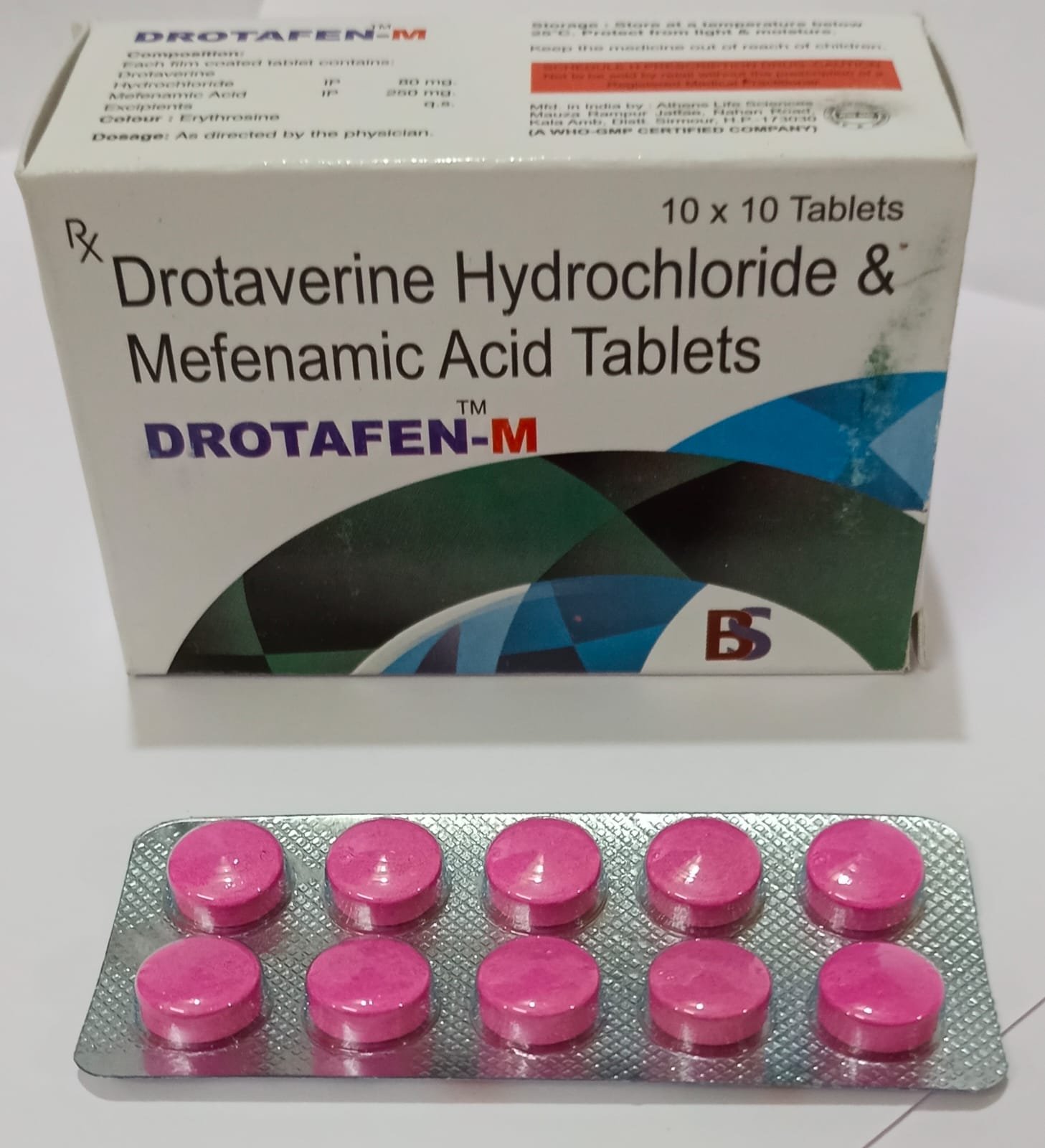
DROTAFEN-M
Drotaverine 80 mg. & Mefenamic Acid 250
mg. TABLETS
For Quick Relief of Pain Associated with Spasm
DROTAVERINE +MEFENAMIC ACID:
Drotaverine + Mefenamic Acid is a combination medication used to
relieve pain, spasms, and discomfort in the abdomen. Here are the
key details:
Drotaverine: An anti-spasmodic medicine that relieves
contractions (spasms) associated with smooth muscles in the
abdomen.
Mefenamic Acid: A non-steroidal anti-inflammatory drug
(NSAID) that blocks the release of certain chemical messengers
causing abdominal pain and inflammation.
Uses:
Abdominal Pain: Effective in managing abdominal pain due to
various causes.
Cramps: Provides relief from cramps associated with smooth
muscle spasms.
Bloating: Helps alleviate discomfort related to bloating.
Common Side Effects: Nausea, vomiting, diarrhea, dry mouth,
heartburn, vertigo, insomnia, hypotension (low blood pressure),
and more.
Remember to consult your healthcare provider for personalized
advice on using this medication
Nonsteroidal anti-inflammatory drugs (NSAIDs) are medications
that relieve pain, reduce fever, and decrease inflammation. Here
are some key points:
How They Work:
NSAIDs block specific enzymes called cyclo-oxygenase (COX)
enzymes, which produce prostaglandins.
Prostaglandins control processes like inflammation, blood flow,
and blood clot formation.
Uses:
NSAIDs treat mild-to-moderate pain from conditions
like headaches, menstruation, osteoarthritis, and rheumatoid
arthritis.
Types:
COX-1 Selective: Favor COX-1, more likely to cause
gastrointestinal side effects.
COX-2 Selective: Higher cardiovascular risk, less gastrointestinal
effects.
Examples: Ibuprofen, Naproxen, Meloxicam, and Diclofenac.
Let’s explore these different types of colic pain:
Biliary Colic:
Description: Intermittent abdominal pain originating from the
biliary tract (usually gallbladder or bile ducts).
Causes: Often due to gallstones or gallbladder dysfunction.
Location: Typically felt under the right ribcage or in the right
shoulder.
Accompanied by: Nausea, vomiting, and abdominal tenderness.
Duration: Episodes last from 20 minutes to a few hours.
Important: If pain persists, seek medical attention12 .
GI Colic:
Acute pain related to increased pressure in hollow organs
(intestines, appendix, fallopian tubes, or urinary tract).
Symptoms: Similar to biliary colic but can occur in different
locations.
Causes: Various factors, including spasms and inflammation.
Treatment: Depends on the underlying condition.
Spasmodic Dysmenorrhea:
Description: Painful menstrual cramps caused by uterine
contractions.
Location: Lower abdomen.
Treatment: Heat therapy, pain relievers, and lifestyle adjustments.